Road slot cutting and control joint cutting: what each one is
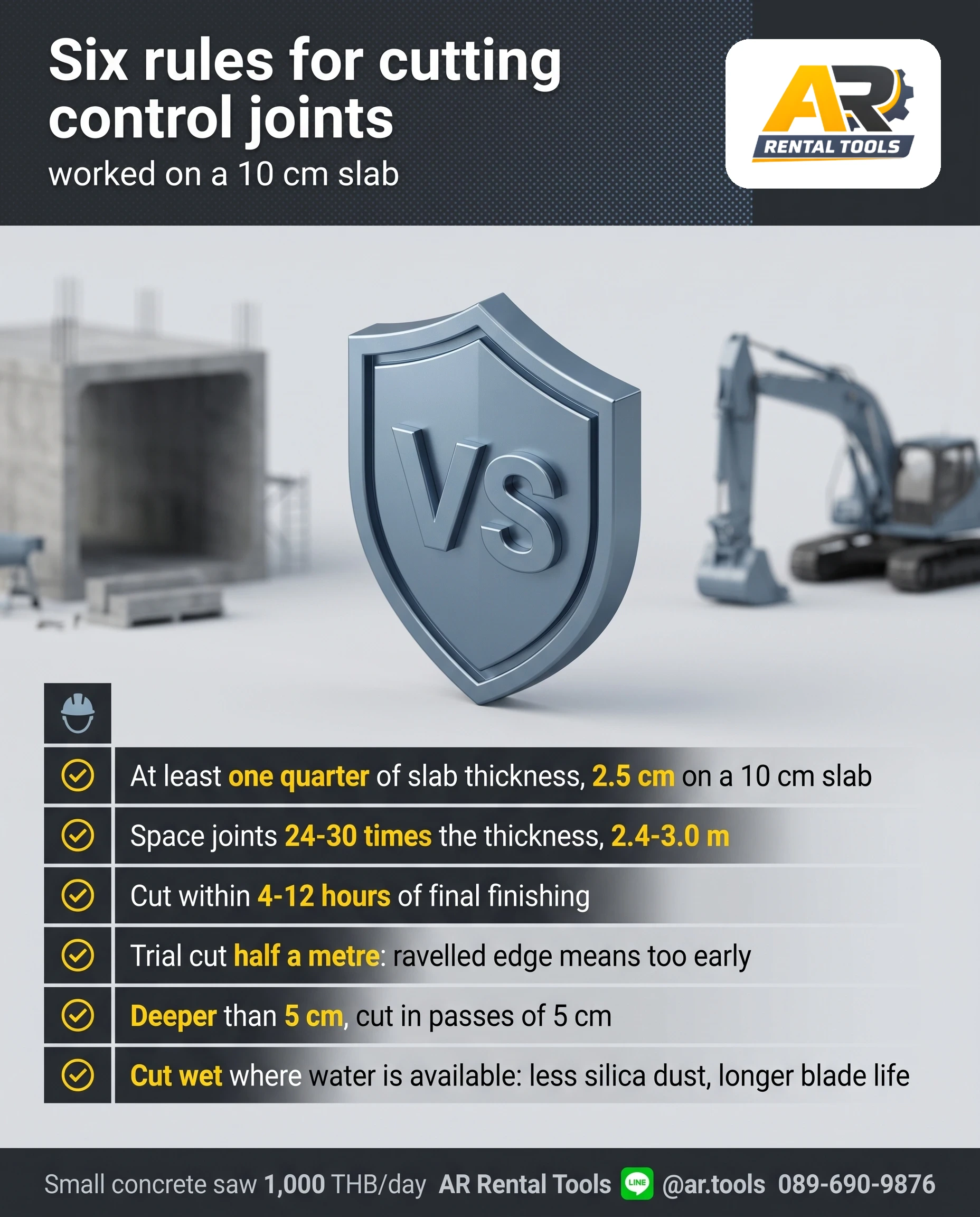
Road slot cutting and control joint cutting use the same machine, and most people searching for a road cutting saw are about to do one of the two. A control joint is a shallow groove cut into a slab that has just been finished, roughly one quarter of the slab thickness deep, so that shrinkage cracking follows the line you chose. A road slot is a deep cut straight through the surface layer, opening a trench for pipe, cable, or partial removal of the slab.
The difference that decides which machine you take is depth. A control joint on a 10 cm parking slab needs a groove only 2.5 cm deep, while a water pipe trench is usually 15-25 cm deep depending on the designed level. The first job is comfortable on a 14-16 inch blade. The second one starts at a 24 inch blade.
Timing is the other difference. Control joints have a narrow window, normally 4-12 hours after final finishing. Leave it overnight on a hot day and the slab has usually cracked on its own already. Road slot cutting in an existing slab has no such limit and can be done any day, but the pipe and cable runs under the surface must be checked first, every time.
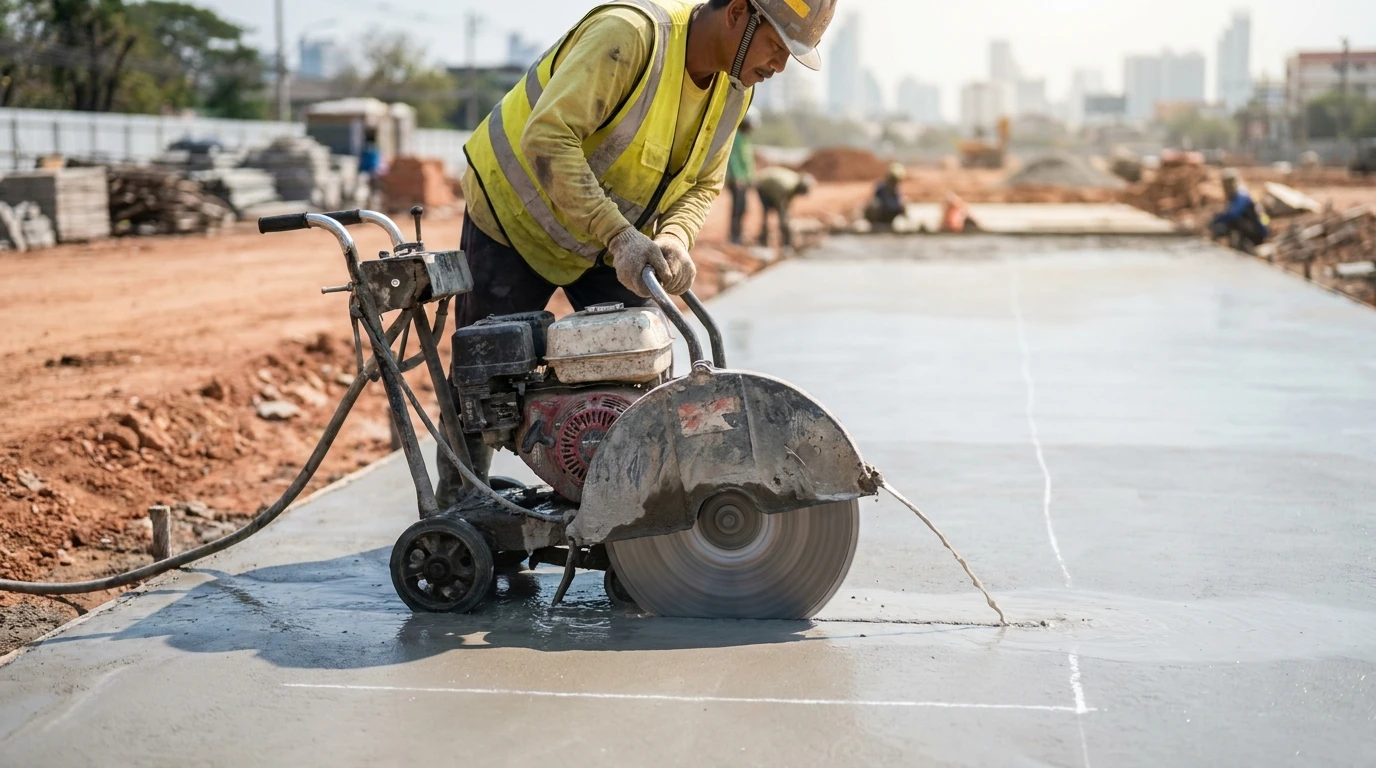
Both jobs run on a walk-behind concrete saw: a 13 HP petrol machine on wheels, with a blade guard and a depth crank. The operator walks it along the marked line rather than holding it, because a run of several dozen metres needs a straight line and a constant depth from end to end.