
What a plate compactor is, and why compaction matters
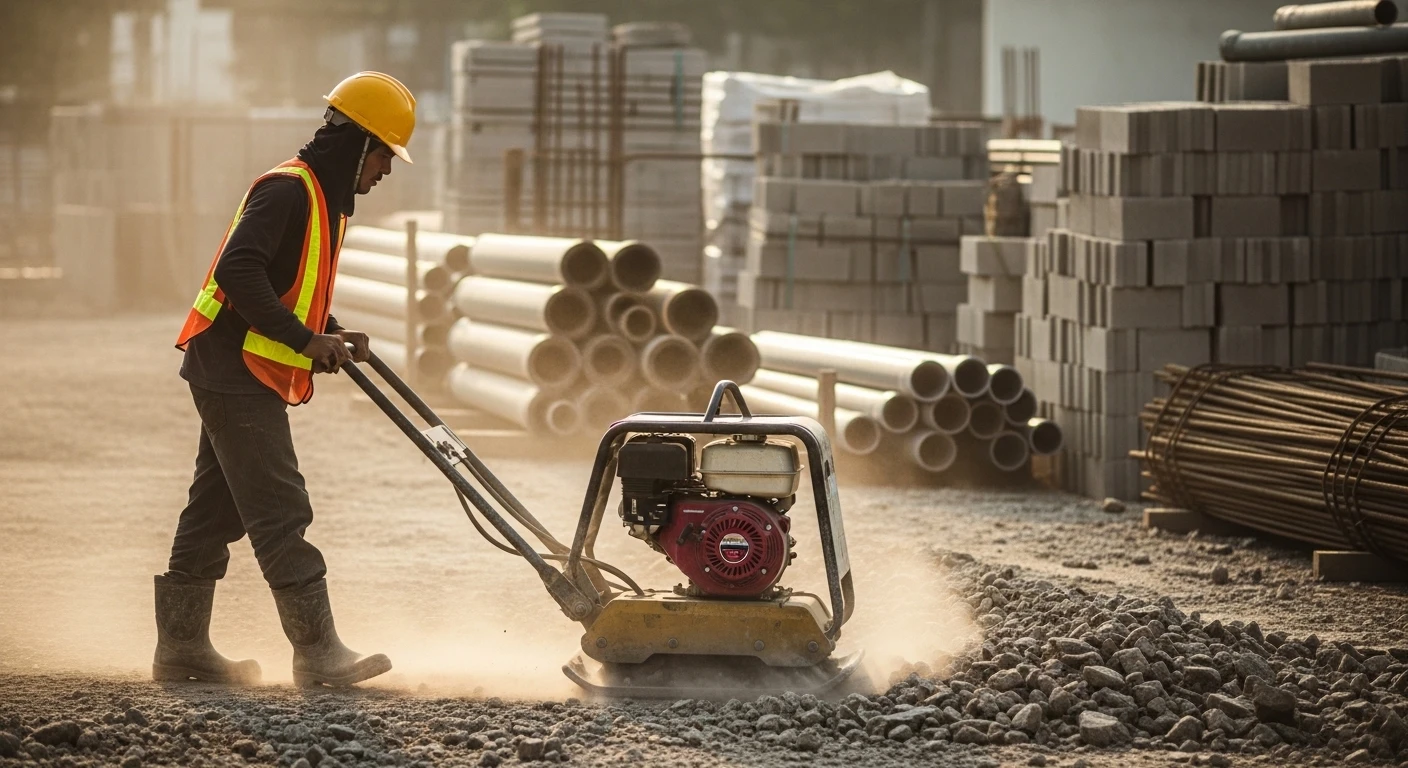
A plate compactor is a tool that compacts soil, crushed rock, or sand to make it firm and level before the next stage of work. A steel base plate vibrates and strikes the ground at high frequency, packing the particles together and driving out air gaps. The result is a hard, dense surface that carries load better.
Compaction matters because ground that is not compacted will settle later, causing concrete floors to crack, tile to break, or roads to dip. Work that should always be compacted first includes footings before pouring a slab, the base before laying paving blocks, fill work, and backfilling over pipe runs. Compacting well from the start avoids repair costs that are far higher later.
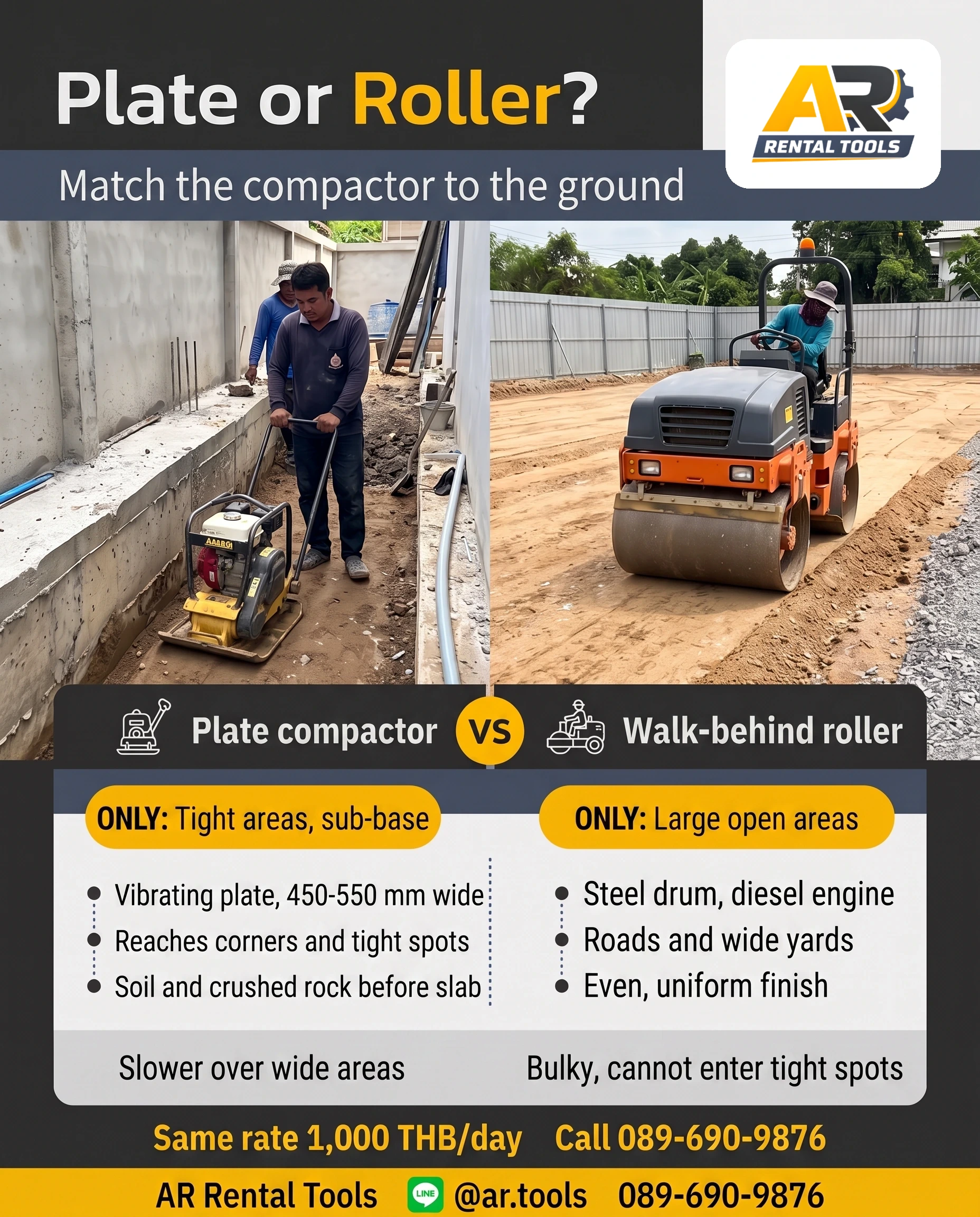
AR's plate compactor is a walk-behind vibrating-plate type that the operator guides by the handle. It suits general flat-ground compaction, with a plate width of about 450-550 mm that reaches tight areas and corners better than a large roller and is easier to move.
If you are unsure how much compaction your job needs, or which machine size to use, see the ground-compaction category on the tools and pricing page, or call and describe the surface and the thickness of the layer so the team can advise before you decide.