

What a breaker is, and how it differs from a rotary hammer
A jackhammer, often called an electric breaker, is a power tool for breaking and chipping concrete, plaster, tile, and other hard surfaces. It works by delivering repeated impacts through a chisel bit to knock the material apart. It suits demolition and surface-opening work that is too slow or too hard to do by hand.
The most common confusion is between a breaker and a rotary hammer. They look similar but work differently. A breaker delivers impact only; the bit does not rotate, and it is used for breaking and chipping. A rotary hammer rotates and hammers together, and is designed to drill holes for anchors or conduit. Using a breaker to drill gives a poor, slow hole, and using a rotary hammer to break thick slab is slow and overloads the tool.
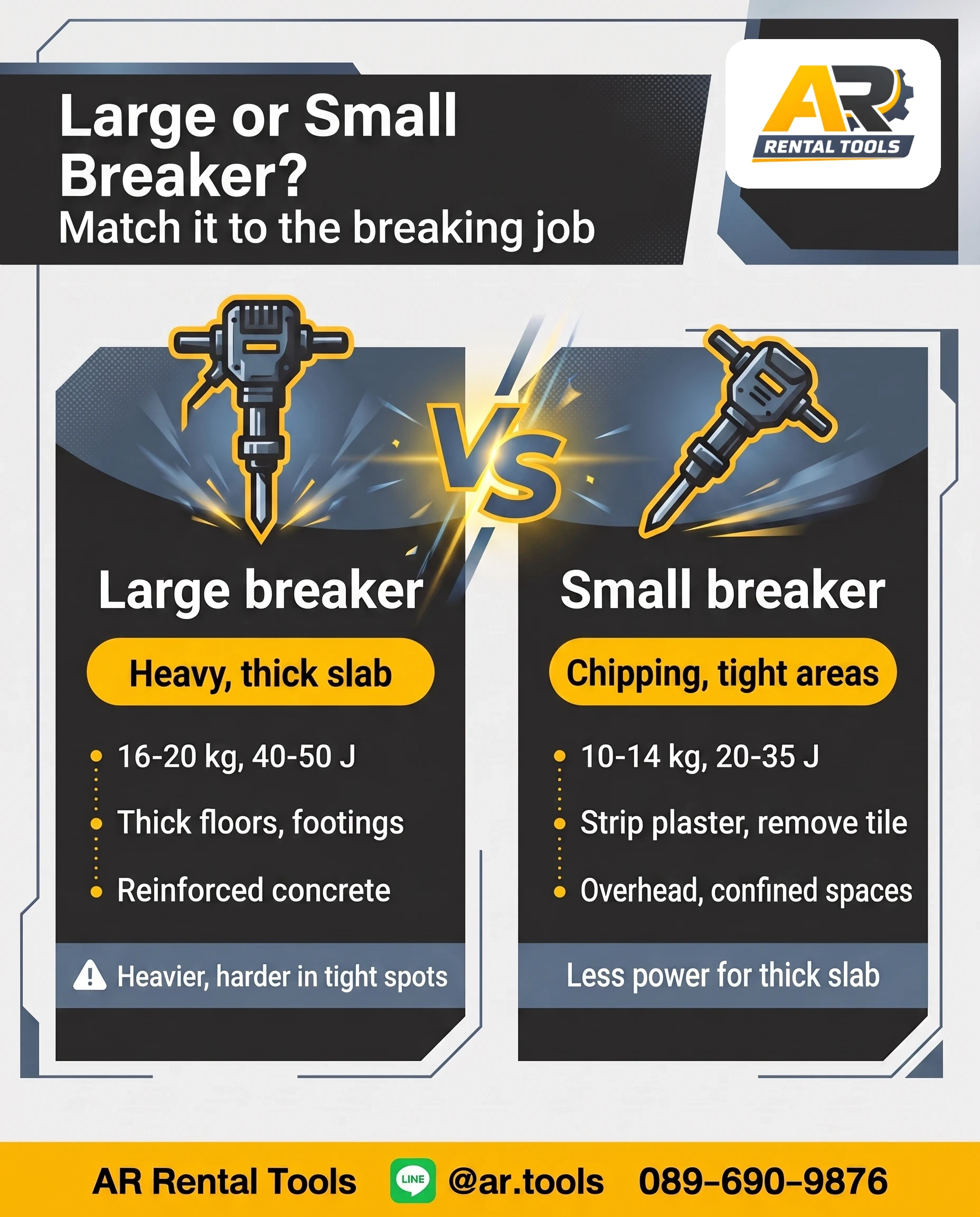
Work that suits a breaker includes removing concrete floors, chipping old plaster off walls, removing floor and wall tile, opening chases for pipe in thick walls, breaking small footings, and general demolition. The thicker and harder the material, the more you gain by using a breaker instead of manual labour.
If your main job is drilling holes for anchors, wiring, or conduit, look at the rotary hammer category instead. But for breaking, demolition, or surface chipping, a breaker is the right tool. See all models and rates on the tools and pricing page, or call and describe the job so the team can advise before you decide.